
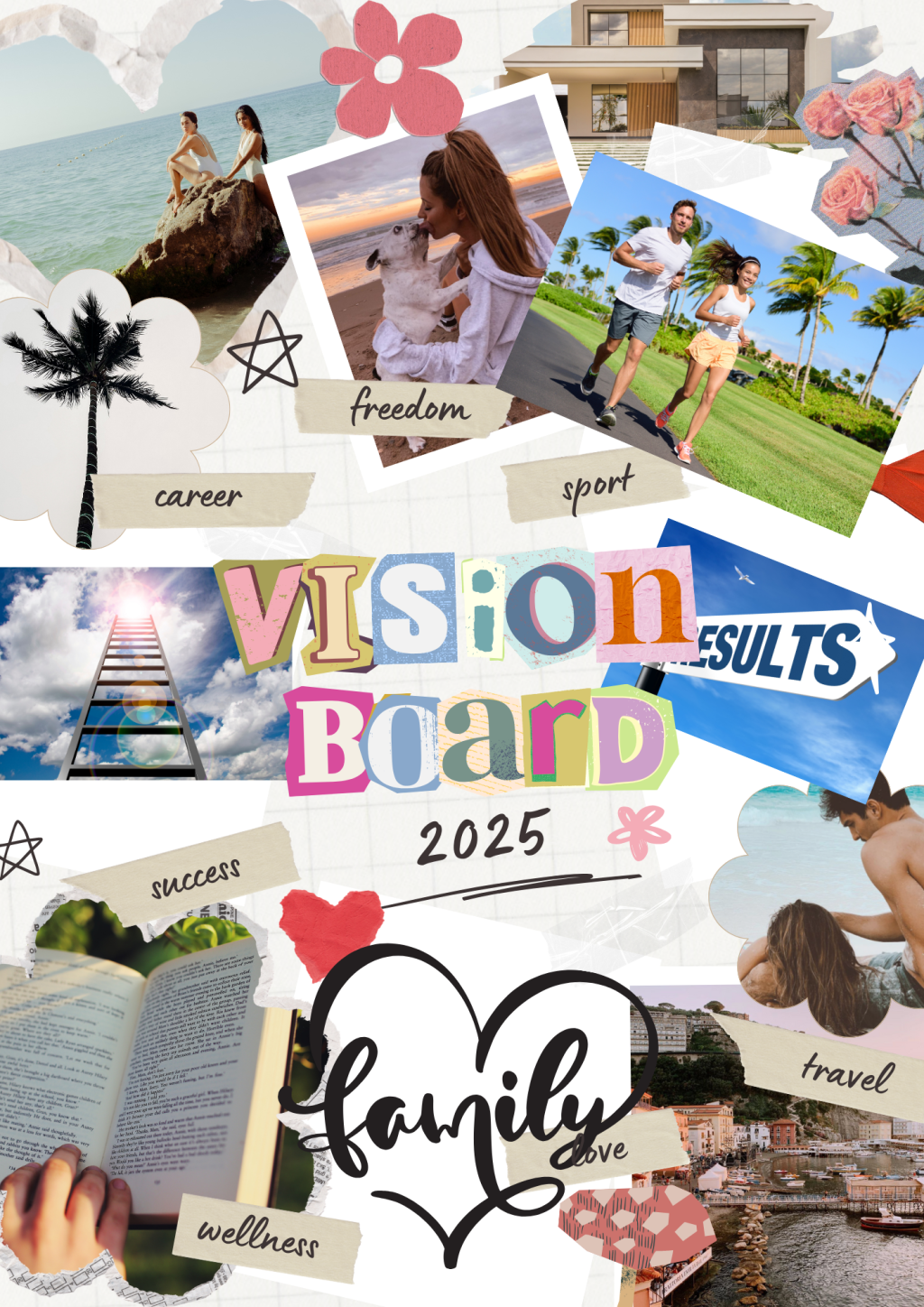
How often do we sit down, chart our dreams, and work toward them with intention? Vision boards and goal-setting journals have burgeoned on the market, and social media is abuzz with trends surrounding vision boards.
This personal planning phenomenon is everywhere; most of us have done it, are doing it, or will do it in some form. So why aren’t we teaching children to adopt these practices from a young age? We expect them to learn math, science, and literature—all essential, of course. But what about the skill of dreaming, planning, and achieving?
Make Vision Boarding a Thing in Schools
Students often say:
“I want to be a doctor.”
“I want to go to Mars.”
“I want to be my own boss when I am older.”
As educators, we should respond:
“Great. Let me give you tools to explore it, dream it, plan it, and achieve it.”
Goal setting is fundamental to vision boarding. It’s more than just deciding what you want to achieve; it’s about developing the skills and mindset to make it happen. For students, these skills are invaluable.
When children learn to set goals, they gain a sense of ownership over their actions and outcomes. It fosters resilience because setbacks become part of the journey rather than the end of it. Students also learn how to prioritise, stay focused, and adapt to changing circumstances—skills that are essential not only in school but in life.
Studies on goal-setting theory show that individuals who set specific, challenging goals perform better than those who don’t. For students, this translates into higher academic achievement, improved self-confidence, and a greater sense of purpose.
The Role of Vision Boarding
Creating a vision board is a thoughtful process. It’s more than just making a poster or sticking magazine cutouts into a collage. Vision boarding encourages, if not forces, an individual to think long-term. It puts a child in a position to consider what really matters, building intrinsic motivation and a sense of purpose.
Research shows a decline in intrinsic motivation in schooling, while mental health crises are on the rise. Children rarely walk into school and are given autonomy to express themselves and their passions. How often do we ask them what they want to learn, or what they envision their academic careers to look like? From the earliest stages, education focuses on delivering directives and covering content deemed essential. While this approach ensures foundational knowledge, it often leaves little room for personal exploration and self-direction. Vision boarding, on the other hand, empowers students to take charge of their futures.
I often say to my students: “You already have what it takes to thrive in this world; you just have to find it within you.”
How will they, if they aren’t given the space and skills to do the inner work?
Vision boarding develops critical thinking: “What is achievable for me in this time frame?” It helps students break big climbs into small steps: “Okay, that’s my end goal; how am I getting there?”
Vision boarding is exciting. It makes abstract goals tangible, and the glass ceiling disappears—the one set by society and mainstream education. It taps into creativity and self-expression. But the real magic comes in the improved focus learners develop after creating their vision boards and striving to achieve what’s on them.
Why Schools Don’t Teach It and Why They Should
Despite its benefits, goal setting and vision boarding are rarely prioritised in schools. Why? One reason is the heavy emphasis on academic subjects. Skills like goal setting are often dismissed as “soft” or non-essential. But this mindset overlooks their profound impact on both personal and academic success.
By introducing these practices, we’re not detracting from academics; we’re enhancing them. A student who learns to set goals is more likely to stay motivated, manage their time effectively, and achieve higher grades. More importantly, they’re learning to take charge of their lives—a skill that extends far beyond the classroom.
How to Introduce It in Classrooms
Incorporating vision boarding into the curriculum doesn’t have to be complicated. Here are some practical steps:
- Start Small: Begin with short-term goals and simple vision boards. For younger students, this could mean finishing a book or improving handwriting.
- Tie It to Academics: Show students how goal setting can apply to their studies, such as setting targets for test scores or mastering a challenging concept.
- Reflect and Adjust: Build regular check-ins into the process. Encourage students to evaluate their progress, celebrate successes, and adapt their goals as needed.
- Integrate Creativity: Pair vision boarding with art or writing assignments to help students express their aspirations in multiple ways.
The Transformative Potential
Imagine a generation of students who not only dream big but know how to make their dreams a reality. Teaching goal setting and vision boarding equips them with the tools to navigate challenges and live with purpose. It’s not just about academic success; it’s about building confident, capable individuals who understand their power to shape the world.
As adults, many of us have discovered the value of setting goals and creating vision boards to guide our lives. So why wait? Let’s start teaching these practices to children today and watch them transform their futures tomorrow.
What kind of world could we create if every child learned to set goals and dream big from the start?
If you want to know more and read the research conducted on vision boarding in schools, check out the list below.
References
Duckworth, Angela. Grit: The Power of Passion and Perseverance. Scribner, 2016.
Dweck, Carol S. Mindset: The New Psychology of Success. Ballantine Books, 2006.
Friesen, Lori. “Why Vision Boards Are Especially Meaningful This Year for Your Students.” Dr. Lori Friesen, 14 Jan. 2021, https://www.drlorifriesen.com/blog/why-vision-boards-are-especially-meaningful-this-year-for-your-students.
“How Vision Boards Help Achieve Goals.” Psychology Today, 5 Jan. 2021, http://www.psychologytoday.com/us/articles/vision-boards-achievement.
Locke, Edwin A., and Gary P. Latham. A Theory of Goal Setting and Task Performance. Prentice Hall, 1990.
Olsen, Maria K., et al. Exploring the Use of Vision Boards in Career Guidance: Insights from Swedish Schools. Malmö University, 2023. Malmö University Digital Repository, https://mau.diva-portal.org/smash/get/diva2:1799362/FULLTEXT01.pdf.
Pink, Daniel H. Drive: The Surprising Truth About What Motivates Us. Riverhead Books, 2009.
Ryan, Richard M., and Edward L. Deci. “Self-Determination Theory and the Facilitation of Intrinsic Motivation, Social Development, and Well-Being.” American Psychologist, vol. 55, no. 1, 2000, pp. 68–78.
Santos, Graziella E., et al. “Vision Boards and Adolescent Career Counseling: A Culturally Responsive Approach.” Journal of Creativity in Mental Health, vol. 15, no. 4, 2019, pp. 512–526. ResearchGate, https://www.researchgate.net/publication/332651295_Vision_Boards_and_Adolescent_Career_Counseling_A_Culturally_Responsive_Approach.

Leave a comment