
Transcendent thinking underpins the necessity for interdisciplinary learning in secondary education.
In the rush to “fix” education through standardised metrics and AI-driven efficiency, we have overlooked a fundamental biological reality: the human brain is not a computer to be programmed, but a social organ that grows through the pursuit of meaning.
Mary Helen Immordino-Yang’s latest research (2024–2025) has provided the evidence to drive the interdisciplinary learning agenda: transcendent thinking; the ability to look beyond the immediate “what” of a lesson to the broader “why” and “how it matters to humanity,” is the primary driver of adolescent brain development.
What is Transcendent Thinking?
Transcendent thinking isn’t just “daydreaming” or concentrated focus in area, like the form of transcendental meditation. In neurobiological terms, transcendent thinking is the ability to move from concrete observations (e.g., “The water is polluted”) to abstract, systems-level reflections (e.g., “How do our economic choices impact the rights of future generations?”).
Immordino-Yang’s longitudinal MRI studies reveal that when adolescents engage in this type of high-level meaning-making, they aren’t just practicing a “soft skill.” They are physically rewiring their brains.
The Neuroscience of the “Big Picture”
The research shows that grappling with “the big meaning” strengthens the connectivity between two critical brain systems:
- The Default Mode Network (DMN): Usually associated with internal reflection, memory, and imagining the future.
- The Executive Control Network (ECN): Responsible for focused attention and goal-directed behavior.
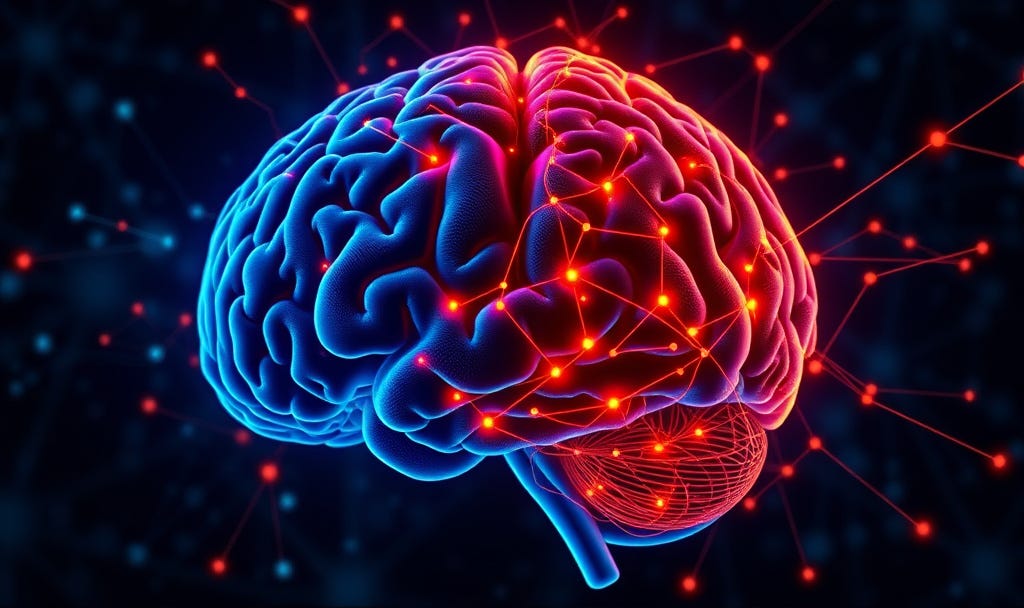
In a healthy, developing brain, these two networks work in tandem. When a student reflects on their place in the world or the ethics of a global issue, they are effectively “training” the neural pathways that allow for complex, adult-level reasoning.
Crucially, the more a student engages in transcendent thinking, the more their brain’s physical architecture grows over time, predicting better psychosocial health and even higher cognitive performance in the long run.
The Policy Implications
Civic-Mindedness is Not Optional; Interdisciplinary Learning is Essential
For too long, policy advisors and school boards have treated “Civic Education,” “Ethics,” and “Philosophy” as the “extras.”
If we treat education as a series of isolated, concrete tasks (test-prep, rote memorisation, skill-drills), we are essentially starving the brain of the very “nutrients” it needs to build complex neural networks. By focusing exclusively on the “what,” we inhibit the development of the “how.”
If transcendent thinking is the engine of neural growth, then interdisciplinary learning is its fuel. To move a student from the concrete “what” to the systemic “why,” we must dismantle the silos of isolated subjects that mirror industrial-age efficiency rather than biological reality. When we fuse ethics with ecology, or historical narrative with data science, we force the brain to engage in relational reasoning; the very act of bridging disparate concepts to find a higher-order meaning. This bringing together of disciplines prevents the Executive Control Network from merely performing tasks and instead recruits the Default Mode Network to construct a coherent worldview. In short, interdisciplinary curricula provide the necessary complexity to trigger the “synaptic leap” from rote learner to visionary thinker; without it, we are offering students the bricks of knowledge but denying them the architectural plans of understanding.
Transcendent Thinking as a Tool for Equity
Reflecting on the research findings and how this could be applied in schools; the question of inclusion arises. It would be a mistake to view transcendent thinking solely as a cognitive upgrade; it is fundamentally an instrument of equity and DEIJ (Diversity, Equity, Inclusion, and Justice) efforts. Immordino-Yang’s research (2024–2025) emphasises that the Default Mode Network is most powerfully activated when learners engage with issues of social and moral significance. It allows students to contextualise their lived experiences within broader social structures, fostering a sense of agency and identity that rote, task-based schooling often stifles. By shifting from “what” to “why it matters to humanity,” we provide all students, regardless of their zip code or background, the cognitive architecture necessary to engage in civic reasoning and dismantle the systemic silos that perpetuate inequality.
So, how do we achieve this?
In a school ecosystem, department leads are primarily serving the agenda that they need to prepare students for the next stage of learning within respective subject areas. Collaboration amongst departments is crucial to transitioning students from ‘task-performers’ to ‘systems-thinkers.’ True interdisciplinary collaboration creates a ‘meaning-anchor’ that allows students to apply the rigours of one discipline to the moral or systemic complexities of another.”
In a school this can be achieved by:
1 – The ‘Big Picture’ Curriculum mapping. School phases (elementary, middle and high) respectively create a curriculum map; a shared and living document that records each subjects progression over the grade levels. The start of the academic year during teacher professional development, is the perfect time for departments to get together and think about the year ahead and create this shared map.
2 – Goals & Strategy – To start the school year with the intention of creating interdisciplinary learning opportunities and then have no goals or structure in place, is a recipe for disaster and a one that we have experienced in schools time and time again. In order to build a true interdisciplinary economy within a school, both goals and strategy need to be defined. Building an interdisciplinary unit takes time and effort, and requires regular reflection and iteration.
3 – Time. This is the golden crux in schools. Where do we get the time from? Truthfully, this has to be built in by senior leadership. It needs to be timetabled and programmed in advance of the school year starting. Once the map is created, departments should be given time to get together and identify similar themes and create potential links between learning experiences. These are small links and interdisciplinary opportunities.
4 – Start small. Interdisciplinary or thinking outside the box doesn’t have to be just the job of senior leadership to facilitate. As a classroom educator, you have power too:
- Make your classroom learning relevant; where possible bring the real world in and ask big questions.
- Create your own links with other educators to provide diversification and links to learning. For example, Language Arts and History may team up together to engage on a research project and cover the skills to creating an essay in tandem.
- Project Based learning or Product Based Learning; design and engage students in deeper learning experiences within your subject area; getting them to think outside the box, transcend the discipline itself and connecting and making links to different subjects or areas of thinking.
The next steps
The transition toward interdisciplinary, transcendent learning is not merely a pedagogical “trend”; it is necessary to the evolution of education. We are not training students in English and Maths to prepare them for the static workplace. We, quite frankly, do not know what the work landscape is going to look like in twenty years time. We need to raise individuals who can connect together the dots, apply different thought processes to synthesise possible solutions to problems. We now also know that the science backs this up. Not only does it produce more agile young adults into tomorrow’s world, it underpins the cognitive development they undergo as adolescents.
When we provide the time, structure, and strategic intent for students to bridge the gap between subjects, we are doing more than teaching them to pass a test. We are fostering the cortical integration required for the next generation of leaders, scientists, and citizens to navigate a world that does not come divided into neat subject headings.
As we look toward the 2030 educational goals, the definition of “quality education” must evolve. We must stop viewing civic-mindedness and interdisciplinary inquiry as luxuries we can only afford after the “real work” of the syllabus is done. The inquiry is the work. If we want to build a workforce, and a society, capable of navigating the complexities of the 21st century, we cannot afford to ignore the transcendent nature of the human mind. To build better brains, we must provide bigger meanings.
References
- Immordino-Yang, M. H. (2024). The Neuroscience of Meaning-Making: Why Transcendent Thinking is a Biological Necessity for Adolescents. Journal of Cognitive Neuroscience (Recent Synthesis).
- Immordino-Yang, M. H., & Gotlieb, R. (2024). Transcendent Thinking and the Developing Brain: Longitudinal Evidence for the Integration of the DMN and ECN. Nature Reviews Psychology.
- Gotlieb, R., Yang, X. F., & Immordino-Yang, M. H. (2022/2024 updated). Default and Executive Network Segregation and Integration During Adolescence: Associations with Transcendent Thinking and Psychosocial Development.(Foundational study for the longitudinal MRI data).
- Immordino-Yang, M. H. (2023). Building Better Brains by Providing Bigger Meanings: The Biological Case for Civic and Interdisciplinary Education. Center for Affective Neuroscience, Development, Learning and Education (CANDLE).

Leave a comment